Map of Tonga in the South Pacific

Map of Tonga in the South Pacific

Sunday, August 28, 2011

Away to 'Eua!


 Once again on the trail of the whales, we went to 'Eua on August 13. There were six of us, plus two more passengers on our 8-minute flight on Saturday morning. Yes, 8 minutes. It was full of wonder, though, as we viewed Tongatapu from the air, saw whales beneath us in the ocean, and approached 'Eua. We landed on a grass landing strip. A smooth and delightful flight! 

 We were met by people from The Hideaway where we were staying, and made a quick trip there to leave our luggage. Then it was off to find the whales. Our captain, Kathleen, was determined to find them for us. What a thrill when we finally began to see them far off and sped in their direction. As soon as we got close, two of us (not me or Jim!) got into the water to swim with them. We thought they had left, but Jim got a lucky shot of David swimming with a whale. Success! No videos I had seen, or photos, can ever do them justice when you see them swimming nearby.  Truly gentle giants.
'Eua's harbor.

A wave of the tail.
 That evening we had reserved a dinner with Wolfgang, who works with Deep Blue Diving. He has made a clay/cement outdoor oven housed in a rough outdoor kitchen. We were ready for his special wood-fired pizza.  It was plentiful and delicious. (Now I'm ready for our own outdoor oven when we go home. Take note!)
The oven, and it's red hot!

Ready to bake! And we were ready to eat!

Wolfgang does the honors.
 On Sunday morning we enjoyed the view of the ocean from The Hideaway, watched whales, walked down to the lookout by the ocean, and just enjoyed being there. By afternoon, though, we were ready for a hike. Perhaps we'd see the 'Eua parrots? After a 15-minute 4-wheel drive transport, we were dropped off with a (sketchy!) map of the area and directions to look for the "blue ribbon." The ground was muddy and full of clay. Walking was a challenge, but we certainly saw some great sights in 'Eua's rainforest, and the fact that it's mountainous was a revelation. Tongatapu, our island, is so flat. We found out later that the elevation is 300+ meters. We heard parrots, and Jim and Jinnet saw one, briefly. The views and the vegetation were outstanding. We did get to the lookout, our destination, but the weather was deteriorating, as we headed back to get picked up. Very tired, but so glad we went.
A relaxing breakfast.

The walk down to the ocean from The Hideaway.

This tree caught our attention on the hike.

Jim at the lookout.

View from the lookout.

We had to get up at 3:30 the next morning to be off by 4 A.M. to catch the ferry to get a "good" seat. The ferry left at 5. It was packed, by then, with people everywhere. The swells of the waves were hitting the side of the boat, so it was like being on a ride at the fair for a while. It was close to 8 A.M. when we got back to Nuku'alofa and had breakfast at Fresh Cafe. We stopped at the Market to get a few vegetables for the rest of the week and went home to sort out our many unforgettable memories (and dirty laundry).
View of Tongatapu from the ferry.

Coming into Nuku'alofa's harbor.


Monday, August 8, 2011

TIST (Tonga Institute of Science and Technology)


 Written by Jim.

Tongan Institute of Science and Technology (TIST), a tertiary  school under the direction of the Ministry of Training, Education, Youth, and Sports (MOTEYS).

A view of TIST. Students gather under the cupola in their free time.

TIST was originally started with the help of the German government as Fokololo 'o e Hau  or the Maritime Polytechnic Institute. Since then it has expanded to include a School of Agriculture, a School of Hospitality and Tourism,  and a School of Engineering  and Construction.

I am currently working in the School of Engineering and Construction in the Department of Carpentry and Joinery. This department awards a nationally accredited Trade Certificate in Carpentry after completing 36 - 38 weeks of  classroom work and 3-plus years of on-the-job training in the building industry.

Students start their studies with 13 weeks of  theory and practical assessment before  spending the next  year working in industry. They then return to school to receive more advanced theory in two more 13-week sessions separated by another year working, until they have studied and worked for a total of 8000 hours.

My Counterpart, Folau, and students.

Jim observes students using the planer.

Jim and students building a door.


The course of study is built on the Tongan, Australian, and New Zealand Building Codes. Topics covered usually start with the foundation of a building and work the way up to the roof and then onto the interior. The teaching of safety is always  stressed it each section.

First year students start, after an extensive introduction to the proper use of tools and safe techniques in the use of power tools, to build in theory a simple structure on columns or piers with a simple rafter roof. We don't actually build this house just the parts, due to the cost of lumber in Tonga, the same timber is used over and over for each part of our house. The building codes and safety are always stressed, and each student must show that he or she is competent in each step. This is done with written work, technical drawing, demonstration of practical skills, and one on one discussion with the instructors.

Second and Third year students are introduced to more and more complicated structures, materials, and techniques. New topics include reinforced concrete, form work, trussed rafters, doors and windows, moldings, interior stairs, and some discussions on commercial buildings.

Graduation held at Queen Salote College Hall, July, 2011.

Graduates and guests.

Graduates


My Counterpart, Folau, and students under the mango tree playing a game of draughts.


Saturday, July 23, 2011

WISE (Women in Sustainable Enterprise)


There has been a banner outside Queen Salote Hall for about a month proclaiming that WISE would be launching there on July 23rd. We also read about it in an email we get called "WOIT: What's on in Tongatapu?" We couldn't seem to grasp what it was really all about and what/who would be there. And did WE want to be there? Today was the day, and since we were going to town to buy a supply of vegetables, we decided to stop there on our way home (It's right on the way.) and see what it was all about.

I'm so glad we did! Around the perimeter of the Hall there were twenty-five to thirty booths. It was all about women and the businesses they have, or are starting. Many had beautiful handicrafts and jewelry (You know my weakness.).  The Talitha Project was represented, which is an NGO trying to meet the needs of women 12-25 "who are in need of empowerment, security, counseling, skill development, support and love." Women were there with businesses in flowers and plants, either to sell or rent for occasions, and there were representatives from the Women in Law Association, just to name a few and to give you an idea of the variety.

In the center of the Hall there were chairs and a stage. The day began with a choir singing, and a pastor offering scripture and prayer, as well as various women extending a welcome. Later the stage was used to introduce the 'Ikale Tahi (Sea Eagles) Rugby Team and the candidates for the Miss Heilala competition for the Heilala Festival.

On the far end, on the built-in stage, a woman-owned preschool provided a play area for children. They were having a great time! There was also the Escape Cafe (owned by the woman who initiated the WISE idea.) which was serving its full menu. Add a raffle.... And, well, a good time was had by all. At least we certainly did!

The entrance to the Hall. Note the tapa cloth on the windows.

Children's play area and the WISE Launch banner.

This bouquet came from thegarden of the woman at this booth, which had nothing to do with flowers.

Meet the 'Ikale Taha Rugby Team and the Miss Heilala contestants.

The 4 Miss Heilala contestants are introduced.

Plants to buy or rent for occasions.

 
Ok, this isn't from the WISE Launch, but, perhaps, future WISE members? Students from Beulah College selling their product: peanut butter. It was at the Heilala Festival block party the night before. Their motto, "It's tasty.....It's yummy.....It's crunching....." We bought a jar....

Saturday, July 16, 2011

Island hoppin'


 Well, not exactly island hopping, but when it's low tide you can actually walk to it. It's a 45 min. walk and the water is knee-high. Sounds a little too aerobic for me.  It's a small island off the central northern tip of Tongatapu, just off Nuku'alofa, and it's called Pangimotu. . They have a small boat that will ferry you there. It leaves at 11 AM and the last boat back is at 4. It's only a 5 min. ride. Since we're Peace Corps they give us a discount and it's 10 pa'anga for the round trip. A great deal!

We spent a very nice day with David and Jinnet beach walking, snorkeling, eating lunch, reading, and a little mohe (sleep) on the beach. What's not to like? Jinnet and I both looked at each other and both of us had the same thought: is this really us having this experience? Wow. For a midwestern gal I sometimes just can't believe it! We're starting to try to do a lot of things now when we can. When we realized that 1/3 of our time here is over Jim and I said that we didn't want to go home and wish we had done some things and hadn't taken the time. This was a good start. This won't be our last trip to Pangimotu!

Pangimotu: view from the water taxi.

Boarding the water taxi. (Yes, we have our life preservers. PC policy.)

The perfect  tree for us and our gear.

Lunch!

Yachts anchored off the island.

Good snorkeling around this partially submerged small ship.

Nuku'alofa, Tongatapu in the distance.

Saturday, July 9, 2011

Welcome home, whales!


It is now time for the whales to return to Tongan waters, and a few had been sighted around ‘Eua, an island to the southeast of us, and a part of Tonga. We signed up with Deep Blue Diving for a Saturday trip to welcome them back. Would we see whales on the trip? No one could say, but we would be thrilled if we did.

We gathered on the dock in the morning, and the weather was good. We got on board and made the 1 hr. 15 min. voyage to a Gilligan’s Island-sized island named Malinoa. We had time on the beach (15-minute leisurely walk took us around the island), a ceremonial kava circle, a delicious lunch, and a ceremony to welcome the whales. By the time it was time to go and look for whales, however, the weather had turned. The sky was gray, the wind cold, and rainclouds threatened, so we headed right back for Tongatapu. Alas, no whale sighting this time, but we have a whole season ahead. The whales come, give birth, and stay in the area until November.

Here are photos to tell more of the story:

We begin boarding for our adventure to welcome the whales.

Jim goes on board.

Our sighting of the island, Malinoa.

This boat will ferry us to the island.

Puaka tunu is the fire for our lunch.

A young woman, the tou'a, prepares the kava for the ceremony. Kava is made from water and the pounded root of the kava plant and drunk by men. It is used here ceremonially, but is also used by groups of men who gather for fellowship.

Our chief for the ceremony returns from the sea after giving the first bowl of kava to the sea god. He is wearing tapa cloth.

The chief and the talking chief go out to call the whales and welcome them back.

The chief blows the conch shell while the talking chief calls to the whales.

Sunday, July 3, 2011

A story, a story…. (with apologies to Gail E. Haley, who won a Caldecott Award for her book with this title.)


Once in a while we eat lunch at the Korean restaurant, small and family-owned, in the heart of Nuku’alofa. What I want to eat when we go there is bebimbap. That’s because one of my favorite (and they are legion) children’s books is Be bim-bop by Linda Sue Park, about a Korean-American family that is joyfully buying the ingredients for this delicious dish and then goes home to make it. In the end the child “stirs like crazy” before eating it.  So I enjoy reliving the story each time we go, because that’s what I always order.

Usually the son waits on us, and he has this friendly smile, and his English is very good, so I decided to be especially nosy and ask him a few questions. His family came to Tonga 20 years ago. (He’s 25.) He just received his BA from NZ in biochemistry. His older sister has received her Masters in political science in France. When she gets home in August, he’ll be leaving for Switzerland to pursue his Masters in biochemistry. He knows some French from high school in Tonga and in NZ. He doesn’t think he’ll learn to ski. As I wrote to my sister in an email, “Not too shabby, huh?”

There—2 stories. Everyone has a story, and I love stories!

(Note: Linda Sue Park won a Newbery Medal for her novel, A single shard. A great read!)

Here we are eating and enjoying, you guessed it, bebimbap.


Saturday, June 25, 2011

Bits 'n' Pieces


Transparency. Every time I visit a government primary school I am intrigued by the information posted in every teacher resource/work room. Written for everyone to see is the information about each teacher: date of birth, whether they’re married, number of children, qualifications, where and when they attended which schools, and where and when they have taught. Occasionally, I’ve even seen salary figures. Of course, this is in a country where one of the first questions you may be asked after meeting someone is “how old are you?” If you really don’t want to tell, you can always make a joke of it, as Tongans are great jokers and teasers.
 
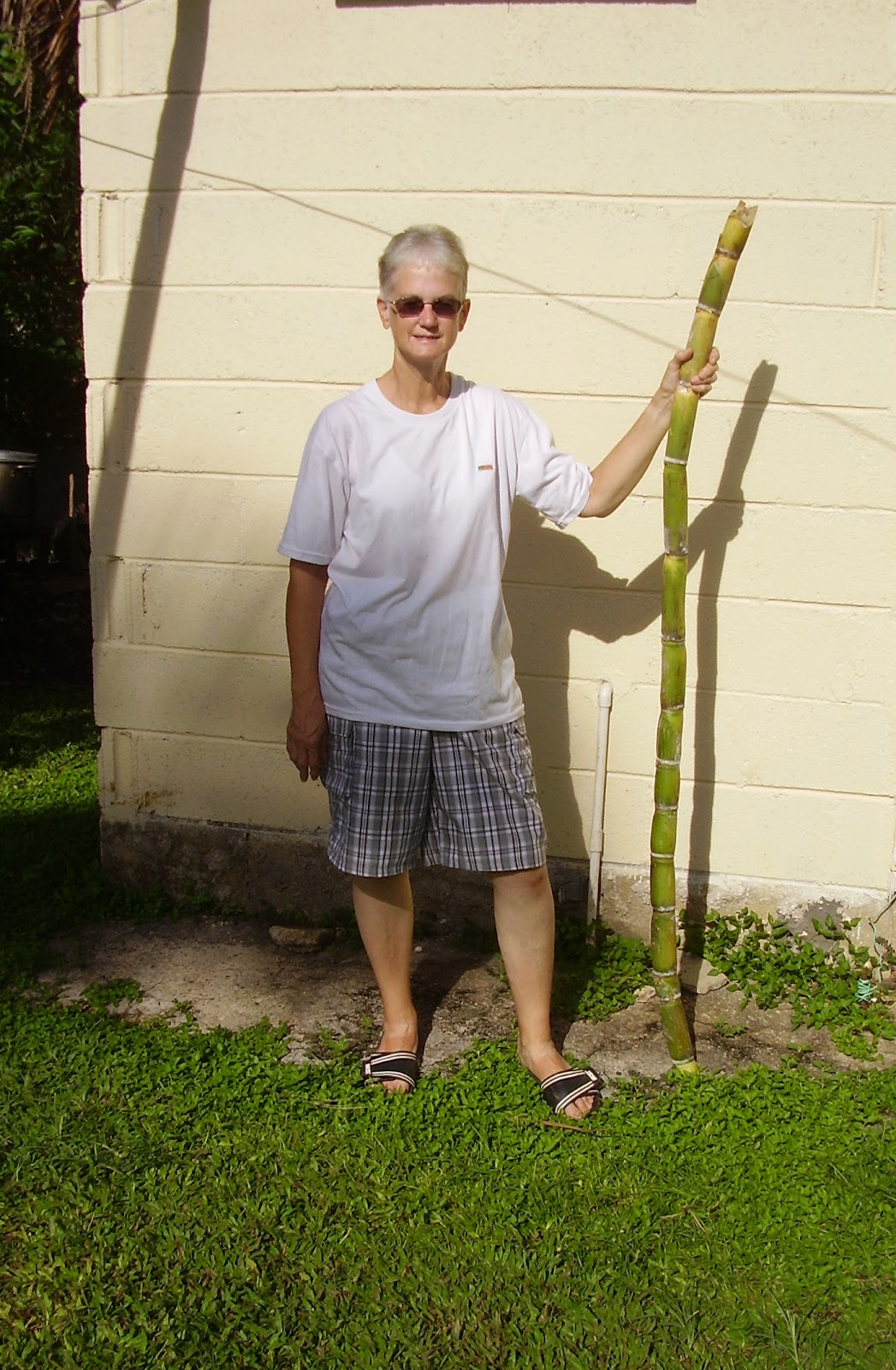
Sharing. This will probably be a recurring theme, but it really struck me, again, recently how much a part of this culture it is to share. I went into one of the curriculum team’s rooms and was offered mai chips (Mai is breadfruit, and quite dry. The only way I really like it is as fried chips. Very tasty!). I happily took a few to munch on. A little later I went to another room to ask a question and was offered bananas. Good. I could add it to my small lunch. (More on bananas in a minute.) As I walked home, a woman in my neighborhood was cutting sugar cane in her yard, and she called to me and gave me a 6 foot piece. (A “no thank you” was absolutely not polite, though I had no idea what we would do with it.) Then I walked into our yard and Sione was standing in the bed of his pick up and knocking down star fruit with his rake. Of course, I was offered one. (I gladly accepted that!) I told them the sugar cane and star fruit were “mana.” They understood and laughed with me. 
With my gift of sugar cane.
 Well, we got their son,Christopher, to cut off 2 pieces of the sugar cane—one for us to try and one for Jim to take to ‘Ofa, our Tongan tutor. Her grandchildren were very happy. The rest we gave to Sione and Belinda.
Back to the bananas. The woman who offered the bananas to me said that these are true Tongan bananas. They grow on shorter trees and are smaller than the variety we see in the States. She said they are the sweetest and best, but you shouldn’t eat them “half raw,” which meant not ripe. She was upset that palangi (foreigners/European descent) insisted on eating them before they are ripe and have good flavor. She also said that anything “good” they said was Tongan. If it wasn’t good, it came from somewhere else, and then they all laughed. (This is the same woman who told us the hopa banana story.)
The sharing of plants and flowers is also accepted as a right. At several of the primary schools we have visited, someone in our group has seen a plant growing in front of the school that she wanted, and just started pulling off a branch, or digging the bulbs. Soon teachers from the school were helping her and giving some to others in our group. Everything grows so well here that they can just put the branches in the soil and they’ll grow. I can’t imagine going into someone’s well-tended garden in the U.S. and just helping myself to plants I’d like, though sometimes I wish I could. I definitely have plant envy. It’s a good thing I don’t have anywhere to plant flowers here.
Poinsettias. Now that it’s fall, I have suddenly noticed the poinsettias blooming. They’re so tall, that I hadn’t paid any attention to them before this-- just tall green saplings, but now that they’re dressed in their red, and sometimes yellow, blooms, they’re everywhere to my eyes. So this is how they really grow, and not in pots, sold for the holidays and discarded? Very nice!


Decoding skills. Having always been (since I can remember) a good reader, and reading came easily for me, decoding the pronunciation of words has never been a problem. Once more I have been rightfully humbled. A partner school of TTI (Tupou Tertiary Institute) is Whitireia Community Polytechnic in New Zealand. As I was discussing resources with a teacher at TTI she kept talking about some school I had never heard of, but I just let it pass. Then I got out my notes about their partner schools, and she said, “That’s the school I’ve been talking about.” What? How do you pronounce that? So we had a little lesson. (By the way, have you tried pronouncing it yet? Whitireia) It’s a Maori word, if that gives you a clue. It’s pronounced Fi(long i)-te(long e)-ra(long a)-a(short a). Also, you should kind of roll the r into an l. There, humble pie eaten.